What’s The Difference Between The Hemp Plant & The…
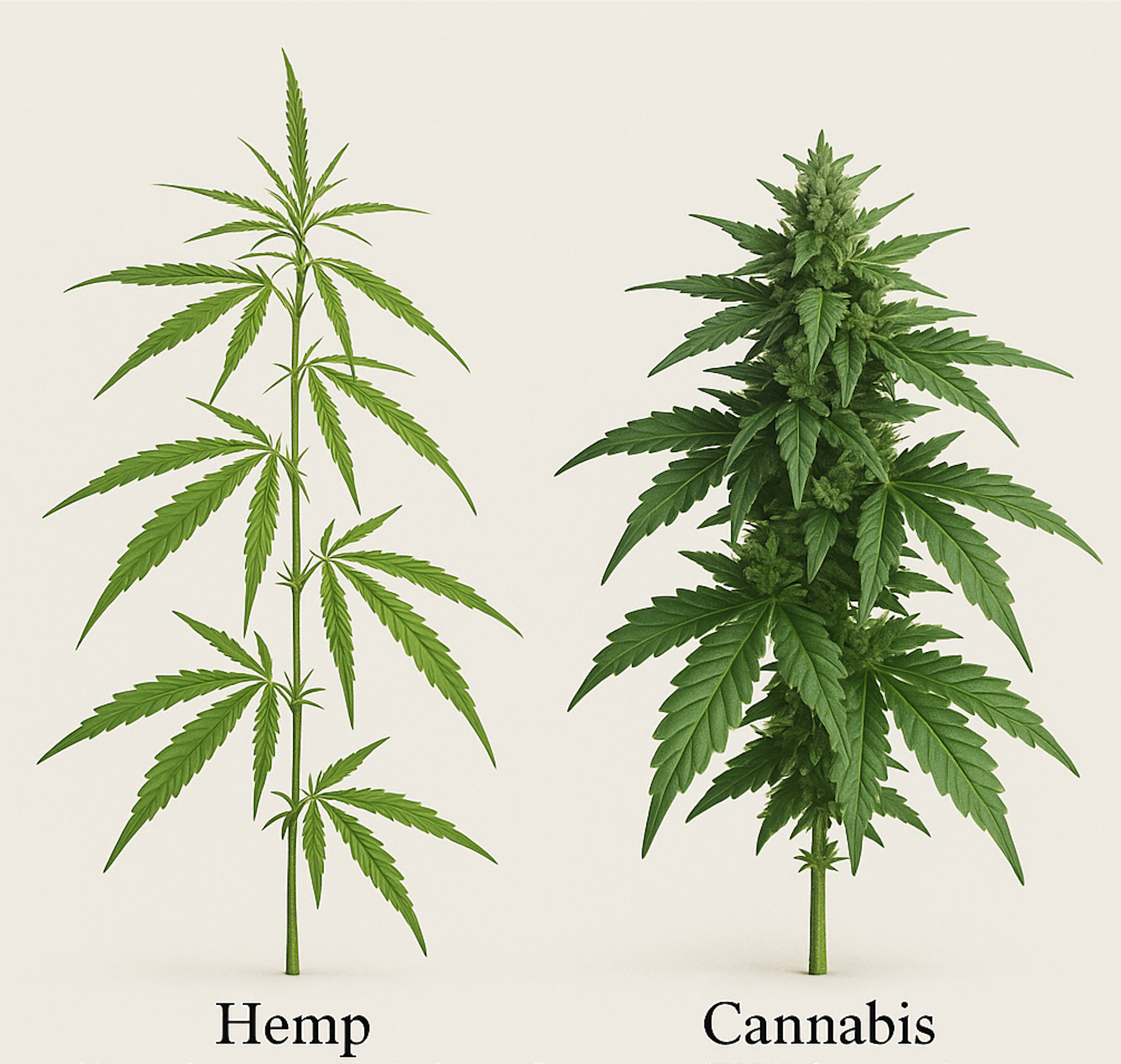
If you’ve visited The Good People Farms storefront at 526 Third Street in Davis, CA. or browsed our education materials, you’ve seen us talk about Cannabis sativa L. – one species with two very different expressions:
- the hemp plant, and
- the cannabis plant (often called marijuana).
They look similar at a glance, but they’re grown for different reasons, regulated differently, and show up in very different kinds of products. This guide breaks down the key similarities and differences in simple terms.
One Species, Two Expression:
Cannabis sativa L.
Both hemp and cannabis belong to the same plant species, Cannabis sativa L.
What separates them isn’t the species name, but how much THC they contain, their legal status and how they’re used:
- Hemp is defined (in U.S. law) as cannabis with less than 0.3% THC by dry weight.
- Cannabis / marijuana typically has much higher THC levels, usually anywhere from 5–30% in the flower.
THC (tetrahydrocannabinol) is the main psychoactive compound that causes the classic cannabis “high.” That’s where the practical differences begin.
The Hemp Plant
Appearance:
Hemp plants are typically taller and more slender, with thin leaves and a lankier, more stalk-driven structure. In fields, they often look more like a tall crop than a bushy garden plant.
THC & CBD content:
- Contains less than 0.3% THC, so it does not get you “high.”
- Often high in CBD (cannabidiol), a non-intoxicating compound associated with wellness and therapeutic use.
Legal status (U.S.):
- Federally legal under the 2018 Farm Bill, as long as THC levels remain below 0.3%.
- Still subject to testing and state regulations, but treated as an agricultural commodity rather than a controlled drug.
How hemp is cultivated:
- Grown for stalks, seeds, and flowers, depending on the end use.
- Fields may be planted densely (for fiber) or with more spacing (for seed and flower production).
Common hemp products:
- Textiles: Clothing, bags, ropes, and other fiber-based products.
- Food & beverages: Hemp seeds, protein powders, cooking oils, hemp milk.
- Wellness products: CBD oils, tinctures, gummies, topicals, capsules, and pet products made from hemp-derived CBD.
- Industrial uses: Hempcrete (a sustainable building material), bioplastics, biofuel, paper, and packaging.
- Accessories & lifestyle goods: Hemp-based paper, bags, notebooks, and eco-friendly packaging.
In short: hemp is the practical, versatile workhorse of the Cannabis sativa L. family—big on fiber, food, and wellness, without the high.
The Cannabis Plant (Marijuana)
Appearance:
Cannabis plants grown for THC are usually shorter and bushier, with dense, resin-coated buds. They look more like classic “garden plants” with prominent flowers.
THC & CBD content:
- Typically contain much higher levels of THC (about 5–30% in dried flower).
- May also contain CBD and other cannabinoids, but THC is usually the star of the show.
- Because of the THC content, you will feel “high” when you consume cannabis, especially in larger amounts or high-potency products.
Legal status (U.S.):
- Federally illegal, still classified as a Schedule I controlled substance.
- State-legal in many places (including California) for medical and/or adult-use (recreational) purposes—under strict licensing and regulations.
How cannabis is cultivated:
- Grown specifically to maximize THC in the flowers.
- Requires careful control of light, temperature, nutrients, and genetics.
- Typically grown in smaller, well-managed plots, greenhouses, or indoor facilities under state-licensed programs.
Common cannabis products:
- Recreational products: Flower (buds), pre-rolls, concentrates (wax, rosin, shatter), and THC edibles (gummies, chocolates, beverages).
- Medicinal products: Tinctures, capsules, topicals, and other THC-based products used for pain, anxiety, sleep, appetite, and more—depending on the patient and doctor guidance.
- Hybrid products: Items that combine THC and CBD (for example, 1:1 tinctures or edibles) to balance effects.
- Vape products: THC oil cartridges and disposable vape pens.
In short: cannabis is grown and used primarily for its psychoactive and medicinal effects, with THC as the key driver.